Guide
Bathroom and WC cleaning guide.
Short guides that use scientific studies to explain where odor, yellowing and mold come from.
 What causes toilet smell, and how do you get rid of it?Toilet smell comes from urine residue, ammonia and sulfur compounds. Using scientific studies, we explain why a clean-looking toilet can smell and how to clean the odor at its source.Read the guide →
 Where does bathroom and sink drain odor come from, and how do you get rid of it?Bathroom and sink drain odor comes from biofilm that builds up in the drain opening and on the strainer. We explain why drain odor keeps coming back and how to clean it.Read the guide →
 Why do toilet bowls turn yellow and form urine scale, and how do you clean them?The yellow-brown ring in a toilet bowl is usually urine scale. We explain how urine scale forms and how to clean fresh yellowing and thickened scale.Read the guide →
 What causes mold and musty smells in the bathroom?The main driver of bathroom mold and musty smells is moisture. We explain the link between soap residue and mold, where musty smells come from and how to keep the bathroom dry.Read the guide →
 Where do droplets spread when you flush the toilet?When you flush, a cloud of fine droplets rises and settles on surfaces. We explain what happens when the lid is closed and which surfaces should be wiped regularly.Read the guide →
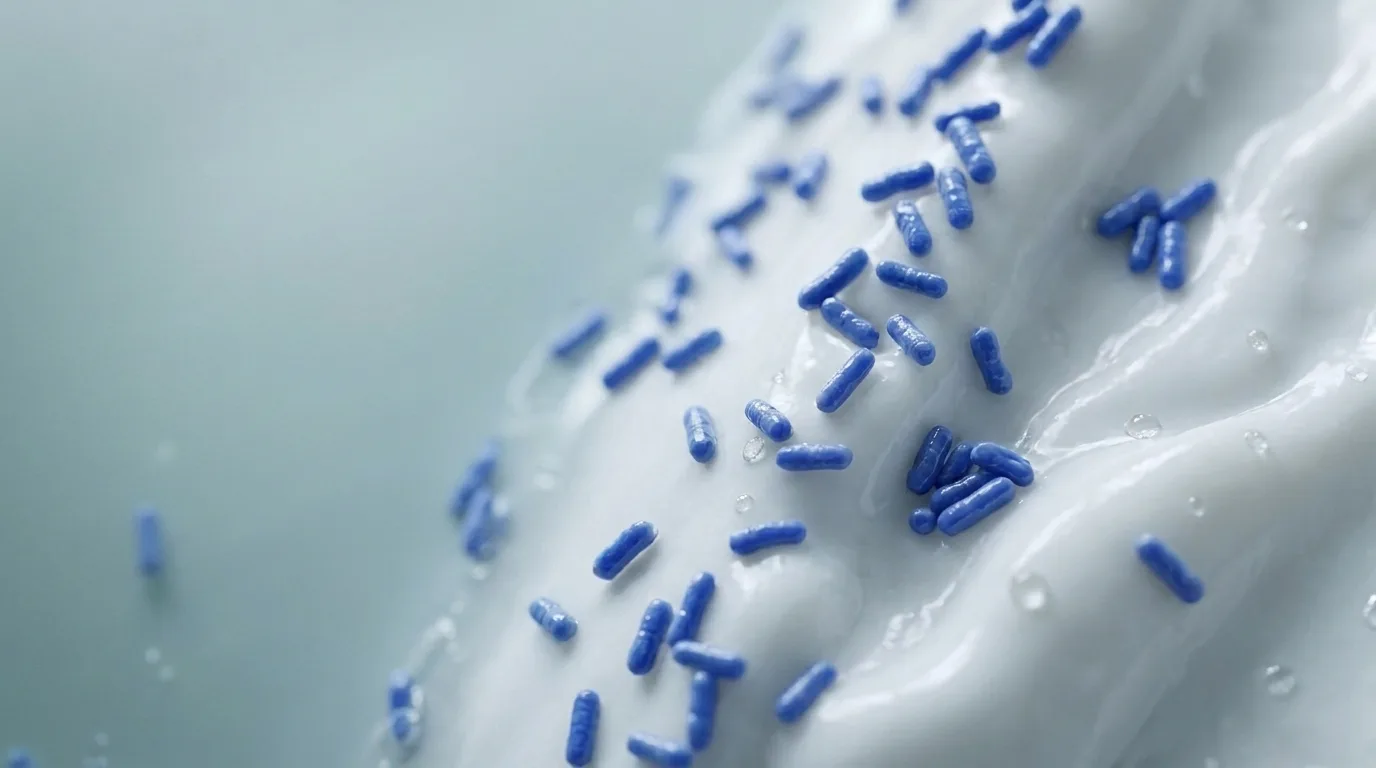 What is probiotic cleaning, and how does it work?Probiotic cleaning is a method that cleans with surfactants and enzymes and leaves probiotics on the surface after cleaning. We explain how it works and what scientific studies have shown.Read the guide →
Common questions about bathroom cleaning
In what order should you clean a bathroom?
Work from top to bottom and from clean to dirty: first the mirror, shelves and tiles, then the sink and faucet, then the shower enclosure or bathtub, and finally the toilet and the floor. Leave the drain openings for last; spraying the drain opening in the evening and leaving it gives the probiotics the whole night to work on the residue.
How many times a week should a bathroom be cleaned?
At least one thorough cleaning a week is recommended for the toilet, sink and drain openings, and wiping several times a week for frequently touched surfaces such as the seat and the flush button. In busy households and closed bathrooms, increasing this frequency helps delay the buildup of odor.
What supplies do you need to clean a bathroom?
A toilet brush, a sponge or scrub brush, a microfiber cloth, a squeegee for glass and a cleaner that can be used throughout the bathroom are enough. A cleaner without chlorine or acid can also be used on marble and faucets, so it cuts down on the number of products you need.