Guide
What is probiotic cleaning, and how does it work?
Probiotic cleaning is a cleaning method that does more than clean the surface: it targets residue with probiotics that remain on the surface after cleaning. In a bathroom, where odor and residue keep building up again, this approach makes sense with regular use.
EcoProbiotic ·
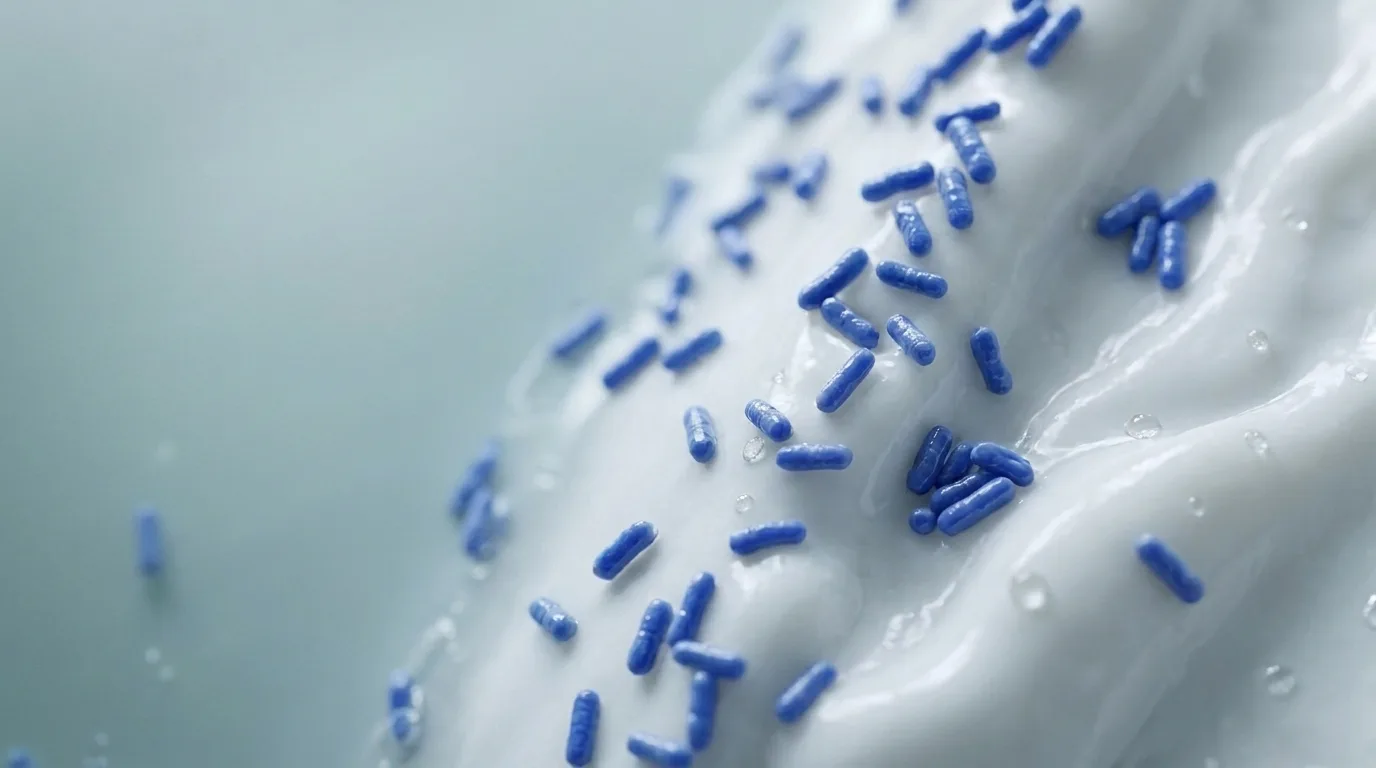
It works in three steps
- Cleans: Surfactants lift visible dirt, soap and skin oil off the surface.
- Breaks down: Natural enzymes secreted by the probiotics break the large molecules in organic residue into small pieces.
- Consumes: The probiotics consume these pieces as food and produce oxygen; as the source of odor shrinks, the bathroom air feels fresher.
Studies on hospital surfaces
When surfaces including toilets, sinks and floors in hospitals in Italy were cleaned with probiotic cleaning products, fewer unwanted microorganisms were found on the surfaces than with conventional cleaning; the effect became established after a few weeks of regular application (Vandini et al., 2014). When the surface microbiota was examined at the gene level, the probiotics were found to become dominant, and when the cleaning was stopped, the surface gradually drifted back toward its previous state (Caselli et al., 2016). A multicenter study reported similar results (Caselli et al., 2018).
Laboratory studies
In a laboratory study on surface materials commonly used in hospitals, dry biofilm formation decreased on surfaces treated with probiotic cleaners (Wormald et al., 2023). It has also been shown that substances secreted by some members of the probiotic bacteria family interrupt the "communication" signals between bacteria and make it harder for biofilm to establish (Devi et al., 2018) (Xu et al., 2024).
How it differs from conventional bathroom cleaners
Products containing chlorine and acid can give off harsh fumes and leave marks on marble and faucets; their effect is limited to the moment they are wiped on. The Probiotic Bathroom & WC Cleaner is free of chlorine, ammonia, phosphates, parabens, SLS, hydrochloric acid, caustic soda, alcohol, acids and bleach; it can be used on marble and faucets. The probiotics that remain on the surface after cleaning keep working on the residue.
How to use it
- Spray on the bowl walls, the drain opening, the shower enclosure, the sink and the faucet.
- Scrub dirty areas with a brush or sponge, and rinse if needed.
- After the last use in the evening, spray the drain opening once or twice and leave it.
- Use it regularly every week; the probiotics' presence on the surface builds up with regular use.
Cleaning that goes to the source instead of masking the odor. View the product Free shipping within Türkiye
Sources
- Vandini A, Temmerman R, Frabetti A, ve ark. Hard surface biocontrol in hospitals using microbial-based cleaning products. PLoS One. 2014;9(9):e108598. doi:10.1371/journal.pone.0108598
- Caselli E, D'Accolti M, Vandini A, ve ark. Impact of a probiotic-based cleaning intervention on the microbiota ecosystem of the hospital surfaces. PLoS One. 2016;11(2):e0148857. doi:10.1371/journal.pone.0148857
- Caselli E, Brusaferro S, Coccagna M, ve ark. Reducing healthcare-associated infections incidence by a probiotic-based sanitation system. PLoS One. 2018;13(7):e0199616. doi:10.1371/journal.pone.0199616
- Wormald R, Humphreys PN, Charles CJ, ve ark. MicrobiologyOpen. 2023;12(6):e1391. doi:10.1002/mbo3.1391
- Devi KR, Srinivasan S, Ravi AV. Microbial Pathogenesis. 2018;120:166–175. doi:10.1016/j.micpath.2018.04.023
- Xu KZ, Yin LJ, Ding ZW, Wang YJ, Jia AQ. LWT. 2024;198:116058. doi:10.1016/j.lwt.2024.116058