Guide
What causes toilet smell, and how do you get rid of it?
Toilet smell usually comes not from the dirt you can see but from a thin, invisible residue. The way to reduce the odor for good is to know where this residue builds up and to clean it at the source.
EcoProbiotic ·
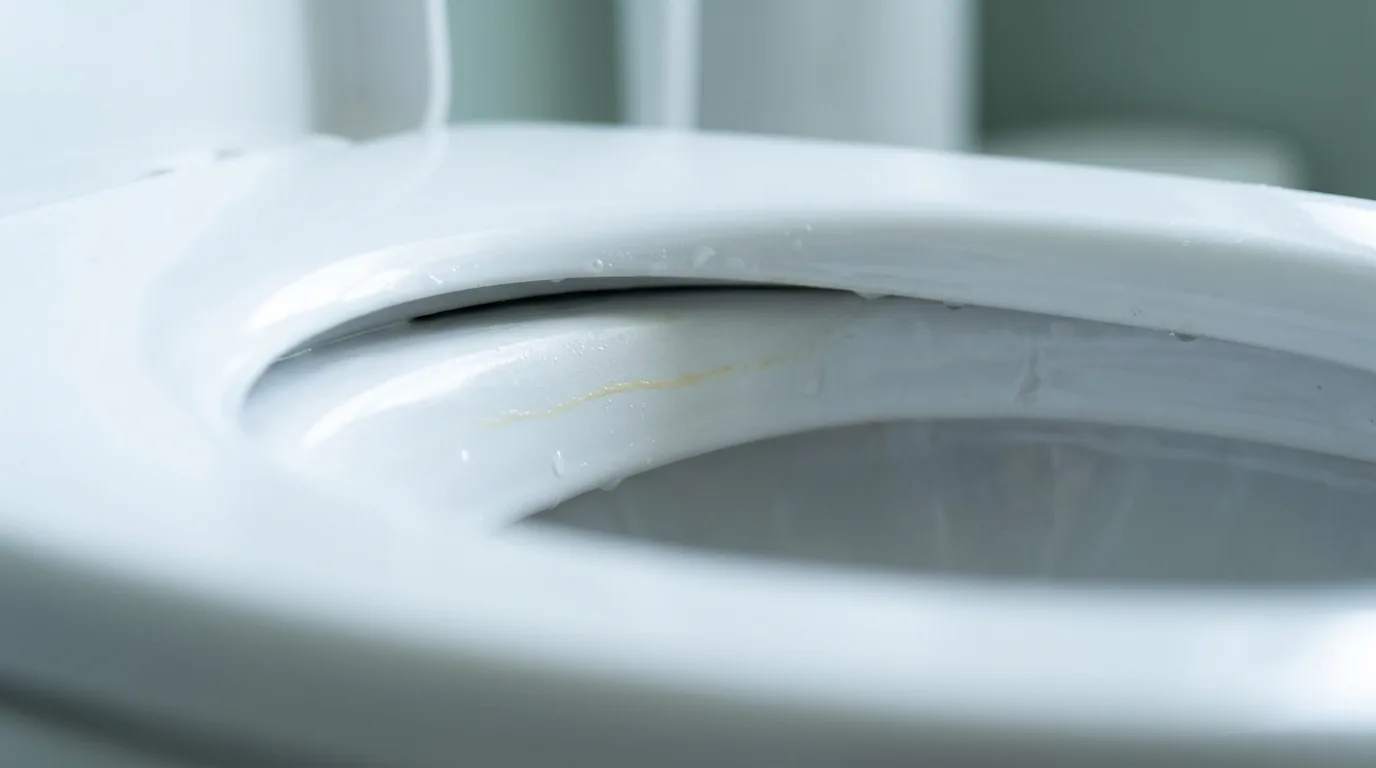
The raw material of odor: urine and organic residue
The urea in urine is broken down by bacteria living on surfaces and in the drain; in the process, ammonia is released into the air, and as conditions change, a mineral deposit forms (Udert et al., 2003). As urine, skin oil and other organic residue decompose, sulfur and nitrogen compounds and some organic acids are released. Toilet smell is not caused by a single substance but by a mixture of these substances (Lin et al., 2013).
Why does a clean-looking toilet smell?
The nose detects sulfur compounds in the air even in extremely small amounts, whereas ammonia is only noticed at much higher levels (Nagata, 2003). That is why a thin film left under the rim, along the waterline, in the drain opening, between the hinges and on the floor in front of the toilet can cause odor even when the toilet looks clean.
Why aren't fragrances and odor eliminator sprays enough?
Fragranced products mask the odor in our perception. In a study that recreated toilet conditions in the laboratory, the effect of fragrance varied with the composition and intensity of the odor (Chappuis et al., 2018). As long as the residue stays in place, odorous substances keep being produced; once the fragrance wears off, the odor comes back.
How do you clean toilet smell at the source?
- Spray the cleaner on the bowl walls, under the rim and along the waterline, then scrub.
- Don't forget the drain opening and the bottom of the bowl; flush after a few minutes.
- Wipe the seat, the lid, between the hinges and the flush button.
- Wipe the outside of the toilet and the floor in front of it; urine splashes build up most here.
- After the last use of the day, spray the drain opening once or twice and leave it.
How does a probiotic cleaner help?
The Probiotic Bathroom & WC Cleaner cleans with surfactants; enzymes secreted by the probiotics it contains break organic residue into small pieces, and the probiotics consume these pieces as food. Because they remain on the surface after cleaning, regular use helps delay the return of odor.
Cleaning that goes to the source instead of masking the odor. View the product Free shipping within Türkiye
Sources
- Udert KM, Larsen TA, Biebow M, Gujer W. Urea hydrolysis and precipitation dynamics in a urine-collecting system. Water Research. 2003;37(11):2571–2582. doi:10.1016/s0043-1354(03)00065-4
- Lin J, Aoll J, Niclass Y, ve ark. Qualitative and quantitative analysis of volatile constituents from latrines. Environmental Science & Technology. 2013;47(14):7876–7882. doi:10.1021/es401677q
- Nagata Y. Measurement of odor threshold by triangle odor bag method. Odor Measurement Review, Ministry of the Environment, Japan, 2003.
- Chappuis CJ, Huber R, Niclass Y, Starkenmann C. Simulating latrine conditions to assess perfume performance against malodour. Flavour and Fragrance Journal. 2018;33(4):313–321. doi:10.1002/ffj.3450